
How we choose our lab partners
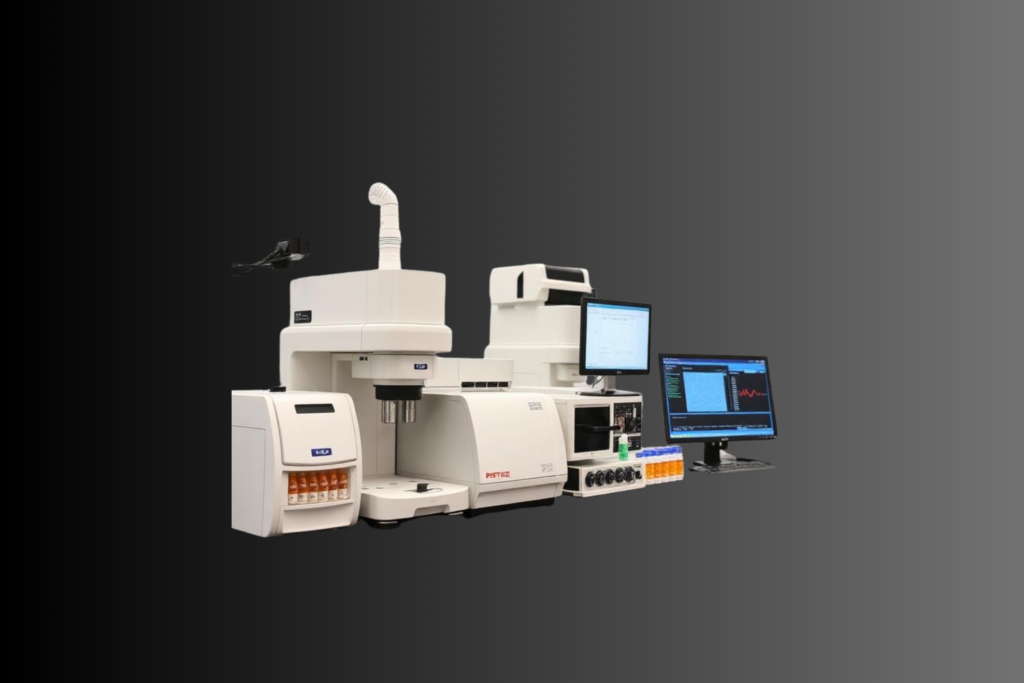
Third-party testing is only meaningful if the third party is genuinely independent and genuinely competent. Here is the full criteria Nova applies when evaluating, selecting, and monitoring our analytical testing partners.
The peptide supply market has a transparency problem. Many suppliers claim third-party testing, but the “third party” is often a sister company, a lab that receives significant revenue from the supplier, or a domestic operation with no independent accreditation. When a supplier and its testing lab share financial interests, the test result is not independent. It is a formality. Nova’s lab selection process is designed to eliminate that conflict entirely.
Non-Negotiable Requirement: ISO 17025 Accreditation
Every laboratory we work with must hold ISO 17025 accreditation from a national accreditation body recognized by the International Laboratory Accreditation Cooperation (ILAC). ISO 17025 is the international standard for testing and calibration laboratory competence. An accredited laboratory has demonstrated, through independent audit, that its quality management system, technical competence, equipment calibration chain, and method validation protocols meet a defined minimum standard.
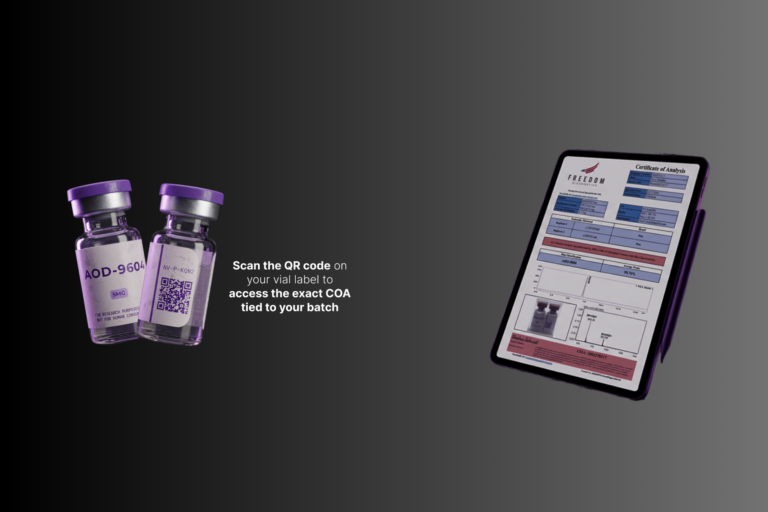
Nova’s current ISO 17025-accredited testing partners include Ethos Analytics, Vanguard Lab, and Freedom Analytics. Each one is independently owned, financially separate from Nova, and audited annually against the same accreditation standard. We rotate testing volume across all three so no single lab carries enough of our throughput to develop a financial dependency on us.
We verify accreditation status directly with the issuing body before onboarding any new lab. We also set a calendar reminder to re-verify at each accreditation renewal cycle. An expired accreditation is grounds for immediate suspension of testing work until renewal is confirmed.
Method Validation Requirements
Accreditation alone does not guarantee that a lab’s specific method for peptide purity analysis is fit for purpose. We require every partner laboratory to provide method validation documentation for HPLC purity determination and mass spectrometry identity confirmation, specific to the compound classes we supply.
The validated parameters we review include the following.
- Specificity. The method must resolve the target peptide from known related impurities such as deletion sequences and oxidized variants.
- Linearity. Response must be linear across the expected concentration range.
- Precision (repeatability and intermediate precision). Replicate injections must produce consistent results.
- Limit of detection and quantification. For reporting impurities at the ≤1% level, the method must be sensitive enough to detect sub-1% peaks reliably.
Financial Independence Requirement
No laboratory that derives more than 5% of its revenue from Nova or any affiliated entity is eligible to serve as a primary testing partner. We ask for a written attestation of financial independence as part of onboarding and review it annually.
This is a bright-line rule, not a guideline.
Split-Sample Cross-Validation
Periodically we send the same batch of a compound to two independent laboratories at the same time, without disclosing to either lab that a parallel test is underway. If the results diverge by more than our pre-defined acceptance criteria (typically ±1% on purity), we investigate the discrepancy before releasing either result.
This ongoing cross-validation is the mechanism that keeps our lab partners accountable over time, not just at onboarding.
Turnaround Transparency
We publish target turnaround times for each lab in our internal QA documentation and hold partners to written SLAs. A batch that cannot be tested and certified within our service window does not ship. We do not issue provisional COAs or release compounds on the assumption that the test will pass.
Every vial that leaves our facility has a completed, filed Certificate of Analysis behind it.